Federal Grant Policy Overhaul Ignites Scientific Fury, Ebola Preparedness Examined, and Hantavirus Surveillance Broadens
A controversial federal proposal threatens research independence. Insights from the 2014 Ebola outbreak surface, while hantavirus monitoring expands across states.
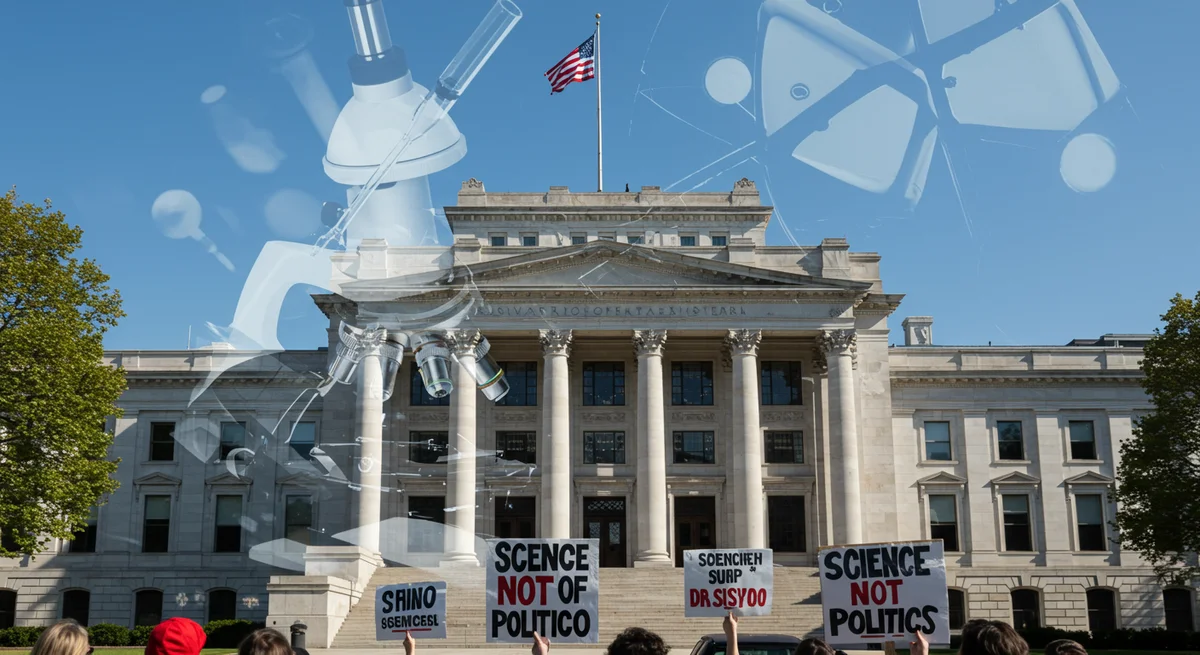
Proposed Federal Grant Rules Spark Widespread Scientific Alarm
Asignificant alteration to the federal grant allocation process is currently generating considerable apprehension among research communities nationwide. As reported by Rachael Robertson and Cheryl Clark of MedPage Today, the White House Office of Management and Budget has introduced an extensive proposed rule in the Federal Register, which, if enacted, would grant political appointees within the Trump administration the authority to determine which researchers and projects receive federal funding.
This proposed framework specifies that projects not aligning with the administration's stated policies and priorities would be denied funding. The review of grant applications would transition from scientific experts, such as study section chiefs or National Institutes of Health (NIH) directors, to politically appointed officials. Should this rule be finalized, it possesses the power to abruptly terminate ongoing grants, even those in their second or third year of funding.
Cheryl Clark further elaborated on the rule's perceived objectives, stating that its "primary goal of this proposed rule is to eliminate any research the administration considers 'woke' – and I'm quoting woke, that word is in the rule – or any projects that have the words diversity, equity, and inclusion, or DEI, especially those enabled by the 'prior administration,' meaning the Biden administration." The concept of DEI is mentioned repeatedly throughout the document, alongside references to what the administration terms "gold standard science," a phrase described by Clark's sources as vaguely defined.
Researchers contacted by Clark expressed profound concerns, using terms such as "dystopian," "disastrous," and a "flagrant assault on our democracy" to characterize the potential ramifications of this rule. The proposal also includes numerous prohibitions, such as preventing researchers from receiving funding if they collaborate with scientists or organizations from specific countries. The Infectious Diseases Society of America has drawn parallels between these restrictions and "McCarthy-era politics." Furthermore, federal funds would be disallowed for publication fees, and attendance at legitimate scientific conferences related to their research would require explicit written permission from the administration in the original grant approval document.
A former NIH program official, who resigned last year due to increasing federal influence, noted a critical shift between last year's version of this funding rule and the current one: every instance of the word "guidance" has been replaced with "regulation." It is crucial to understand that this rule's scope extends beyond medical science, encompassing research funded by all federal agencies, including agriculture, defense, environmental protection, housing and urban development, and energy.
The Fight for Scientific Integrity and Autonomy
Anticipating strong opposition, researchers are mobilizing. Stand Up for Science, an organization established during the first year of the second Trump administration, is actively encouraging scientists to submit comments on this proposed rule via regulations.gov. The group aims to impress upon members of Congress the far-reaching impact of this fundamental shift in federal research funding on their constituents, local hospitals, community organizations, and public health initiatives.
Revisiting the 2014 Ebola Response: Lessons in Preparedness
While current headlines feature an ongoing Ebola outbreak in the Democratic Republic of Congo and debates over treating affected American patients, a decade ago, the U.S. confronted a different Ebola crisis. Reporter Shannon Firth of MedPage Today interviewed clinicians from Emory University Hospital and the University of Nebraska Medical Center (UNMC) to gain insights into their experiences providing Ebola care during that period.
Dr. Aneesh Mehta, the physician on call at Emory when the first patients arrived in August 2014, recounted that while no clinician there had prior experience with Ebola, their training had specifically prepared them for such critical situations. Emory's biocontainment units were initially designed to care for CDC personnel exposed to pathogens in labs or overseas. Similarly, nurses Angela Vasa, MSN, RN, and Morgan Shradar, MPH, BSN, RN, at UNMC affirmed their readiness, having trained extensively for Ebola, which Vasa described as "the most dangerous type of outbreak they could imagine responding to, with the exception of smallpox, if it were to re-emerge as a bioweapon."
The majority of patients during that outbreak were healthcare workers who had been living abroad, though some clinicians contracted the virus while treating patients domestically. A significant challenge was the intense national scrutiny. Dr. Kent Brantly, the first patient treated for Ebola in the U.S., became a national news story upon his arrival at Emory. Medical teams faced immense pressure to provide care, reassure their own families, and quell public fears about viral spread.
Public anxiety surrounding Ebola in 2014 was considerable, fueled by images of severe symptoms. Many Americans were unaware that Ebola is significantly less contagious than diseases like measles and primarily affects caregivers and clinicians. This lack of understanding led to widespread panic, for instance, when Dr. Craig Spencer was in public spaces before exhibiting symptoms. The public, witnessing the high mortality rates in Africa, reacted with understandable fear.

Despite the fear, U.S. medical teams were meticulously prepared. They utilized comprehensive personal protective equipment (PPE), and Emory University implemented a "safety partner" system, where colleagues meticulously monitored each other for any breaches or exposures within patient rooms. Tragically, not all patients survived. Thomas Eric Duncan, a Liberian man treated in Dallas and later at NIH in Bethesda, Maryland, became the first person to die of Ebola in the U.S. Dr. Martin Salia, a surgeon from Sierra Leone and a permanent U.S. resident who had treated patients abroad, also succumbed to the disease. He arrived at UNMC on the 13th day of his illness, unconscious with kidney failure, and passed away 72 hours later. While Salia was the sole fatality among the three Ebola patients at UNMC, all four patients treated at Emory recovered, despite some critical moments. Dr. Mehta noted that the Emory team innovated treatments never before attempted on an Ebola patient, including mechanical ventilation, dialysis, and aggressive use of vasopressors to maintain blood pressure.
These experiences left a profound and lasting impact on the healthcare professionals involved. The objective conclusion drawn is that patients treated within specialized biocontainment units, receiving early intervention and aggressive supportive care, exhibit a considerably strong prognosis. Currently, the U.S. operates 13 such biocontainment units, and Dr. Mehta's team remains ready to admit new patients if necessary. As of June 3, the Trump administration's strategy involves caring for suspected Ebola cases among Americans in Kenya, a situation MedPage Today continues to monitor for any changes.
Expanded Hantavirus Monitoring Underway Across Several States
The number of individuals under surveillance for potential hantavirus exposure has increased significantly. Previously, 41 people were being monitored; this figure has now risen to 65 as of June 3, according to Kristina Fiore of MedPage Today, who has been tracking these numbers in the absence of public data from the CDC.
The increase in monitoring is primarily linked to two commercial flights that carried a cruise ship passenger infected with the Andes virus, a type of hantavirus. Initially, monitoring focused on high-risk individuals seated close to the infected passenger. However, this scope has broadened to include all passengers on those flights, with those seated further away considered lower risk. A spokesperson for the Washington State Department of Health confirmed this expansion, stating that "two additional people in that state are being monitored because, 'they were on the same international flight as an ill person who was later confirmed to have Andes virus. However, they are considered low risk because they did not sit close to the sick passenger.'"
Kristina Fiore's tracking efforts revealed the evolving situation. An initial map indicated five individuals under monitoring in North Dakota; subsequent confirmation from the state's public health department updated this to seven, though further details were withheld. Following this, Fiore contacted other states known to be monitoring individuals who had returned early from the cruise or were near the infected passenger. Several reported increased numbers, with California rising from two to eight, and Maryland from two to five. Further inquiries uncovered additional states, not previously on the tracker, now monitoring residents, including Montana, Oregon, South Carolina, South Dakota, and Wisconsin. The current total stands at 65, with the possibility of more, as a few states have not yet responded to queries.
In Nebraska, 18 individuals completed their initial three weeks of monitoring at the state's national quarantine unit. Five of these individuals have since returned home: two to New York, one to Arizona, one to California, and one to Oregon. The remaining 13 have chosen to complete their additional three weeks of quarantine in Nebraska, as recommended by the facility, though future decisions by these individuals remain to be seen.
Latest Updates on this Story
This breaking news story continues to develop rapidly, highlighting critical intersections of health policy and public health safety. Current news indicates ongoing debate surrounding the proposed federal grant changes, while live coverage of infectious disease surveillance remains a priority. You can monitor all live updates on this story in real-time on MedicareTicker.com.
Related Topics
🔹 Federal Research Funding 🔹 Science Policy 🔹 Public Health Preparedness 🔹 Infectious Disease Outbreaks 🔹 Biocontainment Units 🔹 Hantavirus Surveillance 🔹 Ebola Response Protocols 🔹 Government Oversight
About MedicareTicker News
MedicareTicker.com is your leading independent resource for comprehensive coverage of health policy, infectious disease news, and critical updates impacting the healthcare landscape for seniors and beyond. Our breaking-news category delivers timely, in-depth reports, ensuring our readers are well-informed on the most significant developments in health and medical policy affecting their lives and care. We strive to provide premium, objective analysis on topics ranging from federal regulations to global health crises.
Frequently Asked Questions
What is the primary concern regarding the proposed federal grant rule?
Researchers are primarily worried that the proposed rule would allow political appointees, rather than scientific experts, to decide federal grant awards based on alignment with the administration's policies, potentially leading to the termination of existing grants and suppression of certain research areas like diversity, equity, and inclusion (DEI).
How did U.S. medical teams respond to the 2014 Ebola outbreak?
U.S. medical teams at facilities like Emory University Hospital and UNMC were extensively trained for high-risk infectious diseases, employing biocontainment units, rigorous personal protective equipment (PPE), and innovative treatment strategies, which contributed to a strong prognosis for patients receiving early, aggressive supportive care.
Why has the number of people monitored for hantavirus exposure increased?
The number has risen because monitoring was expanded from only high-risk individuals (those near an infected cruise ship passenger on flights) to include all passengers on those flights, with a few additional states also beginning surveillance efforts.