Major Study Links Ultraprocessed Diets to Sharp Rise in Senior Cognitive Impairment
A landmark longitudinal study reveals a stark correlation between high ultraprocessed food intake and increased risk of dementia and cognitive decline in older U.S. adults.

Alarming Diet-Brain Connection Emerges in Older Adults
A significant longitudinal study has unveiled a concerning relationship between consuming highly processed foods and an elevated risk of cognitive decline among the elderly. Researchers discovered that older American adults who consumed the highest quantities of ultraprocessed foods faced a substantially greater likelihood of developing cognitive impairment, while a diet rich in minimally processed alternatives appeared to offer protective benefits for brain health.
This extensive investigation, detailed in a special edition of the *American Journal of Public Health*, underscores the critical role diet plays in the neurological well-being of seniors. While the research was observational and relied on participants' self-reported dietary habits, its conclusions align with a growing body of scientific evidence regarding the detrimental effects of ultraprocessed foods on various aspects of health.
Quantifying the Risk: Dementia and Mild Cognitive Impairment
The study, led by Dr. Heejin Lee, a distinguished researcher from the Harvard T.H. Chan School of Public Health in Boston, along with her co-authors, meticulously tracked thousands of individuals over nearly a decade. Their analysis indicated that participants in the highest quintile of ultraprocessed food consumption exhibited a 58% increased probability of developing dementia compared to those in the lowest consumption group (HR 1.58, 95% CI 1.). This elevated risk was observed over a median follow-up period of 8.7 years, although the linear trend across all quintiles did not reach statistical significance.
Furthermore, the findings highlighted a pronounced risk for mild cognitive impairment (MCI). Individuals who frequently consumed ultraprocessed items were 46% more prone to experiencing incident MCI (HR 1.46, 95% CI 1., P for trend=0.03). When considering a combined outcome of either dementia or MCI, the risk remained significant, with high consumers being 47% more likely to develop one of these conditions (HR 1.47, 95% CI 1., P for trend=0.02).
Dr. Cindy Leung, ScD, MPH, also affiliated with the Chan School of Public Health and a co-author, articulated the broader implications during a press briefing. "Our understanding already confirms that ultraprocessed food intake is linked to heightened risks for cardiovascular ailments, diabetes, certain cancers, and obesity," Dr. Leung stated. "This study contributes by demonstrating that ultraprocessed food consumption is also crucial for brain health, particularly suggesting that the proliferation of these foods in the American diet may accelerate cognitive decline as individuals age."
The Protective Power of Minimally Processed Foods
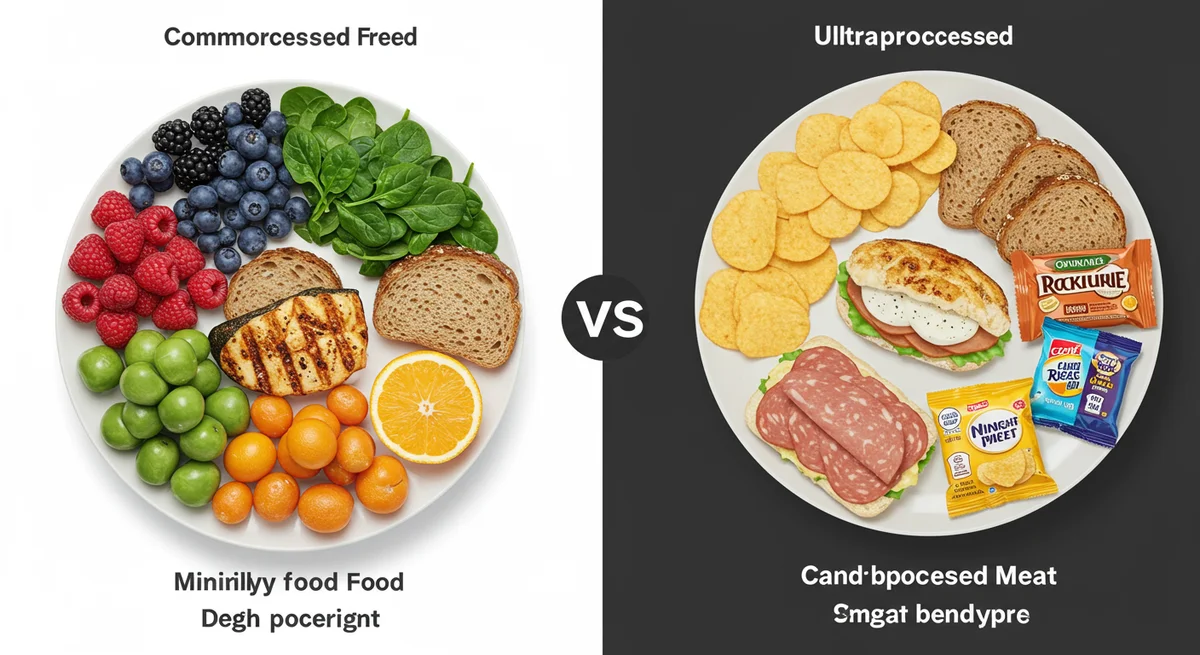
In stark contrast to the findings on ultraprocessed foods, the research revealed a significant positive correlation with diets rich in minimally processed whole foods. Dr. Leung highlighted this encouraging aspect, explaining, "Conversely, we observed the opposite effect with minimally processed whole foods." She elaborated, "Within our study cohort, older Americans who consumed the greatest amounts of minimally processed items—such as fresh fruits and vegetables, whole grains, and unprocessed meats—experienced a 41% reduced risk of developing dementia. They also showed a 24% lower risk for mild cognitive impairment and a 26% lower risk for either of these adverse outcomes combined."
Despite the observational nature of the study, which precludes definitive statements about causation, Dr. Leung underscored the robustness of the discovered association. "While we cannot definitively conclude that ultraprocessed foods directly cause these outcomes, our study significantly reinforces this expanding body of research," she noted. "The connection is biologically plausible and aligns seamlessly with existing knowledge concerning ultraprocessed foods and their contribution to chronic disease risks."
Study Design and Dietary Composition Insights
For their comprehensive analysis, Dr. Lee and her team meticulously monitored 5,370 participants from the Health and Retirement Study (HRS). Dietary habits were assessed in 2013 using a semiquantitative food frequency questionnaire from the HRS Health Care and Nutrition Study, with cognitive impairment outcomes classified based on biennial assessments conducted until 2020. The average age of participants at the study's outset was 64.5 years, with women constituting 55.2% of the group and individuals identifying as white making up 81.7%.
Food items were categorized according to the Nova system of classification. On average, ultraprocessed foods (Nova 4) constituted 21.5% of the total food intake by weight among participants, while minimally processed foods (Nova 1) accounted for a substantial 71.8%. The primary contributors to ultraprocessed food intake were identified as sugar-sweetened beverages, making up 31.2% of the total, followed by other beverages (22.2%), dairy products (11.2%), snacks and sweets (9.7%), and grains and grain-based products (6.2%). The relationships between ultraprocessed foods and cognitive outcomes were carefully adjusted for various demographic data, lifestyle factors, and pre-existing chronic disease histories.
Broader Implications and Call for Policy Action
These findings build upon earlier research, including an Australian study investigating the impact of food processing on brain health and data from the U.K. Biobank suggesting that substituting ultraprocessed options with unprocessed or minimally processed foods could potentially reduce dementia risk. The study's release coincides with a special issue of the *American Journal of Public Health* featuring over a dozen research papers on ultraprocessed foods.
Among these papers is research led by Dr. Jeff Niederdeppe, PhD, from Cornell University in Ithaca, New York, which included a survey of 2,000 Americans indicating widespread public support for initiatives aimed at curbing ultraprocessed food consumption. Dr. Niederdeppe observed, "Ultraprocessed foods have permeated public awareness as a considerable health hazard." He further asserted, "The alignment of public sentiment, bipartisan backing, and scientific evidence creates a crucial window for policy intervention." Dr. Niederdeppe concluded, "Americans appear ready for stronger protections and for holding the food industry accountable, spanning from rigorous additive testing to restrictions on marketing practices."
Dr. Leung also addressed the socio-economic realities influencing dietary choices. "The prevalence of ultraprocessed foods in our food environment is not accidental," she explained. "Simply advising older adults to 'eat better' disregards the complex realities of their food access, particularly for those experiencing social isolation, food insecurity, or living on fixed incomes." She concluded by emphasizing the urgency: "A cure for dementia remains elusive, but if we can identify and address a structural factor contributing to the observed increase in dementia rates across the United States, then action is unequivocally warranted."
Latest Updates on this Story
This breaking news highlights a critical area of public health, with research continuously uncovering deeper connections between diet and cognitive function. As new studies emerge and policy discussions evolve, we anticipate further developments regarding dietary guidelines and food industry regulations. You can monitor all live updates on this story in real-time on MedicareTicker.com.
Related Topics
🔹 Ultraprocessed Foods 🔹 Cognitive Impairment 🔹 Dementia Risk 🔹 Senior Health and Nutrition 🔹 Public Health Policy 🔹 American Journal of Public Health 🔹 Harvard T.H. Chan School of Public Health 🔹 Dietary Guidelines
About MedicareTicker News
MedicareTicker.com provides premier, independent coverage of health policy, medical breakthroughs, and healthcare news particularly relevant to seniors and Medicare beneficiaries. Our expert analysis and comprehensive reporting ensure that our readers are always informed on critical issues impacting their health and financial well-being. We are the leading independent resource for navigating the complex landscape of Medicare and senior health.
Frequently Asked Questions
What are ultraprocessed foods?
Ultraprocessed foods are industrial formulations made primarily from substances extracted from foods (oils, fats, sugar, starch, proteins) or derived from food constituents (hydrogenated fats, modified starches, hydrolyzed proteins). They often contain flavorings, colorings, emulsifiers, and other cosmetic additives, and are generally ready-to-eat or ready-to-heat.
Can reducing ultraprocessed food intake reverse cognitive decline?
While this study suggests a strong association between high intake and increased risk, and lower intake with reduced risk, it does not confirm reversal. However, reducing consumption of these foods and increasing intake of minimally processed whole foods is generally recommended for overall health and may support cognitive function.
What are some examples of minimally processed whole foods?
Minimally processed whole foods include fresh fruits and vegetables, whole grains like oats and brown rice, legumes, nuts, seeds, lean meats, poultry, fish, and eggs. These foods retain most of their natural nutritional properties and do not contain added sugars, unhealthy fats, or artificial ingredients.
Does this study prove that ultraprocessed foods *cause* dementia?
No, the study was observational, meaning it identified a strong association or correlation rather than direct causation. While the findings are biologically plausible and consistent with other research, they suggest a significant link that warrants further investigation, not a definitive cause-and-effect relationship.